
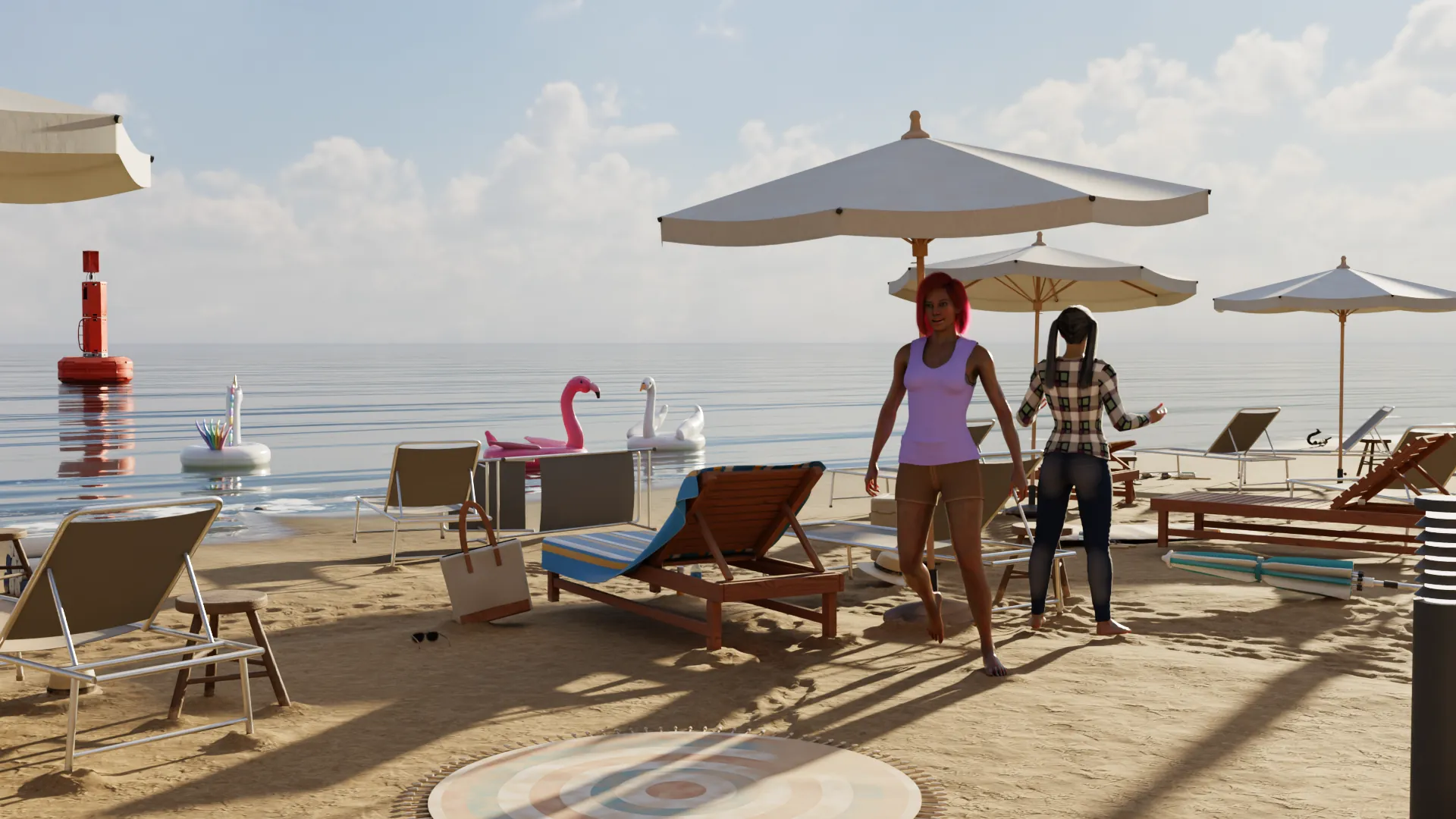
How to make visual novel CGs in 3D
A good CG is staged like a film shot. You decide where people stand, what the light does and where the camera goes.
Coming to the Mac App Store in November or December 2026. Free, with an optional Pro upgrade.
Email me when it is outA CG in a visual novel is a full-screen picture of a key moment, as opposed to the everyday view of characters talking. To make one in 3D, you choose the moment, stage your characters in a set, pick the light and the camera, and render a single picture. In NovelStage that picture can take seconds once the scene is ready.
Plan the moment first
Most weak CGs have the same problem: the people stand side by side and face the camera. Before you open any tool, answer four questions about the moment.
- Who is in the picture, and who should the reader look at first?
- What just happened, and what is each person doing about it?
- How close is the camera? Close means feeling, wide means place.
- What time is it, and what is the weather doing?
Writing the answers down takes a minute and saves a lot of moving things around later.
Stage your characters
Pictures of two people close together are where 3D usually falls apart, with hands passing through shoulders and bodies sinking into sofas. NovelStage fits each pose to the body and the seat, so Sit Here puts someone on the cushion and a hand on a shoulder stays there.
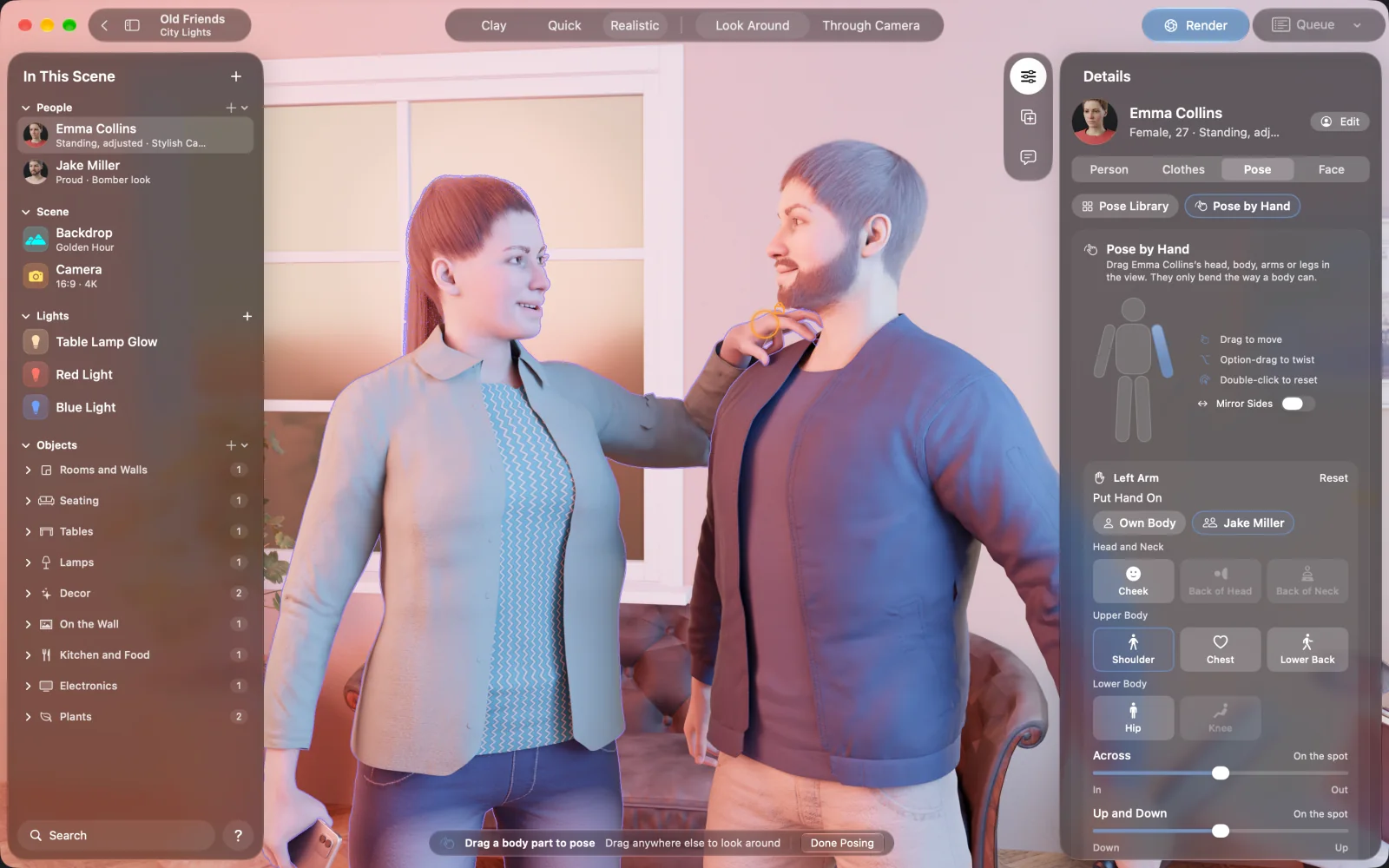
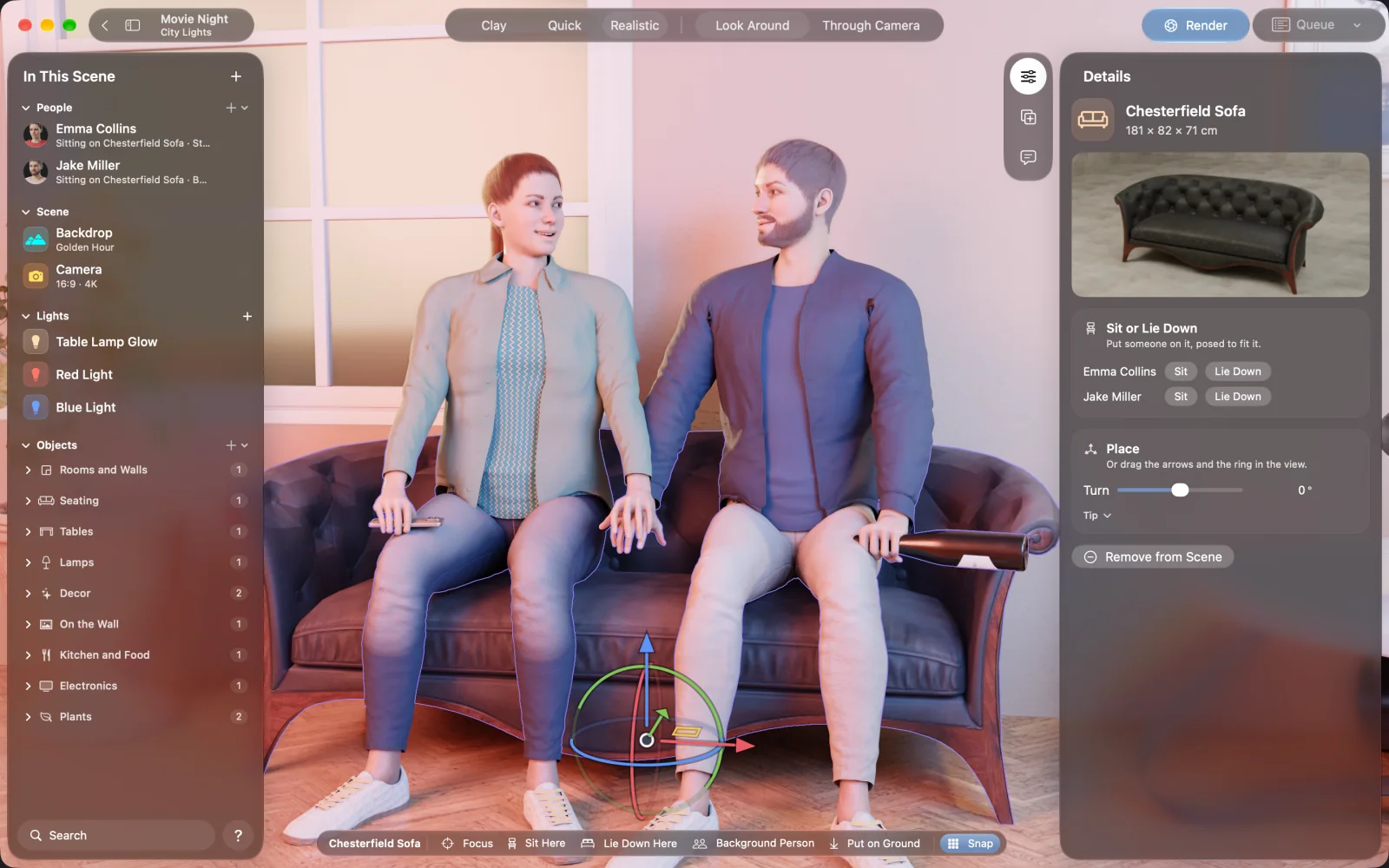
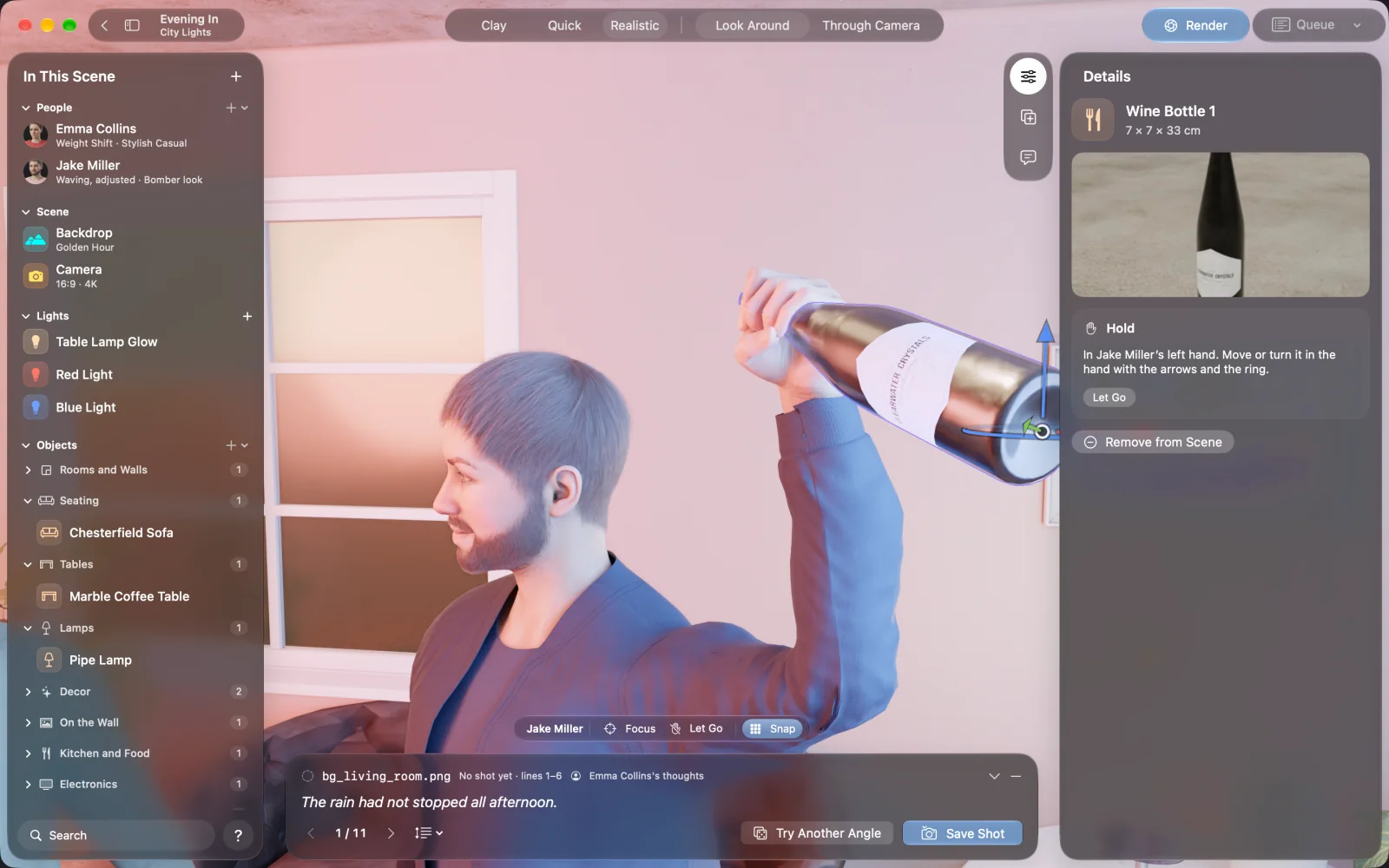
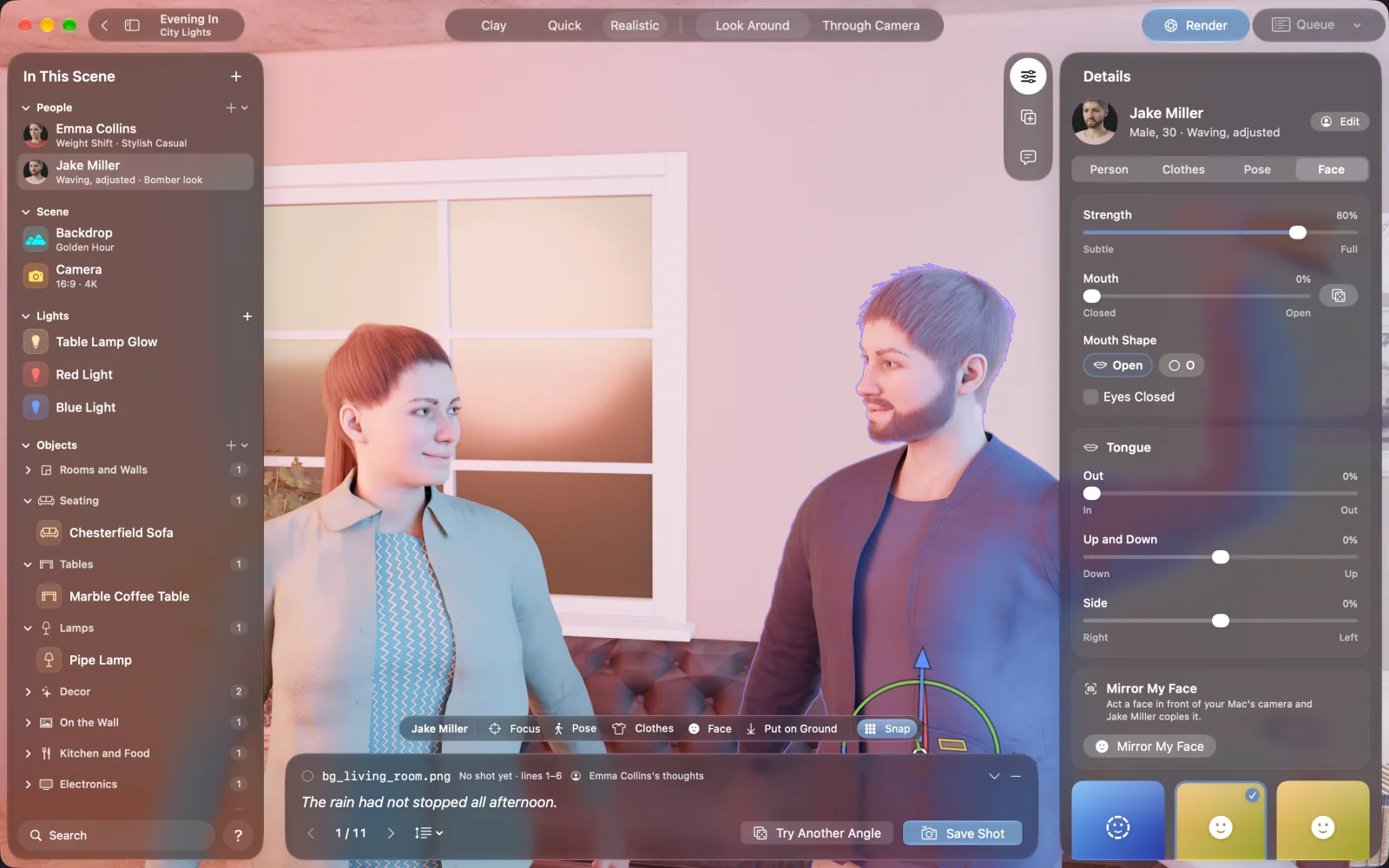
Set each person's expression, then use Looking At to turn their eyes, head and back toward someone. If the moment needs more, add blush, tears or sweat, with a slider or a look such as Embarrassed or Crying.
Let the light set the mood
The same place feels different at each hour. In NovelStage the sun follows the clock, so you can try a scene at sunrise, at midday and at sunset in a few clicks, before you render anything big.
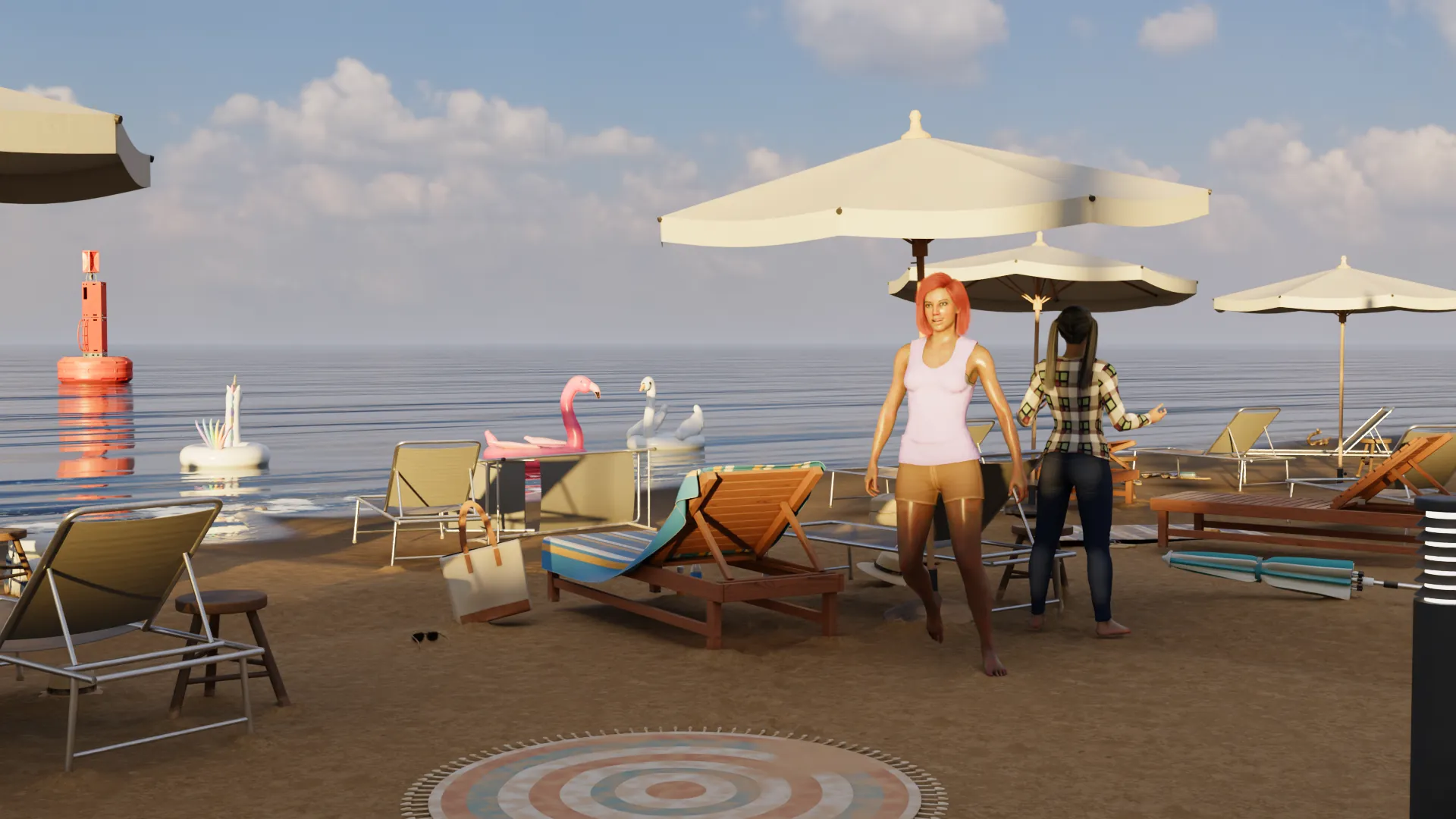
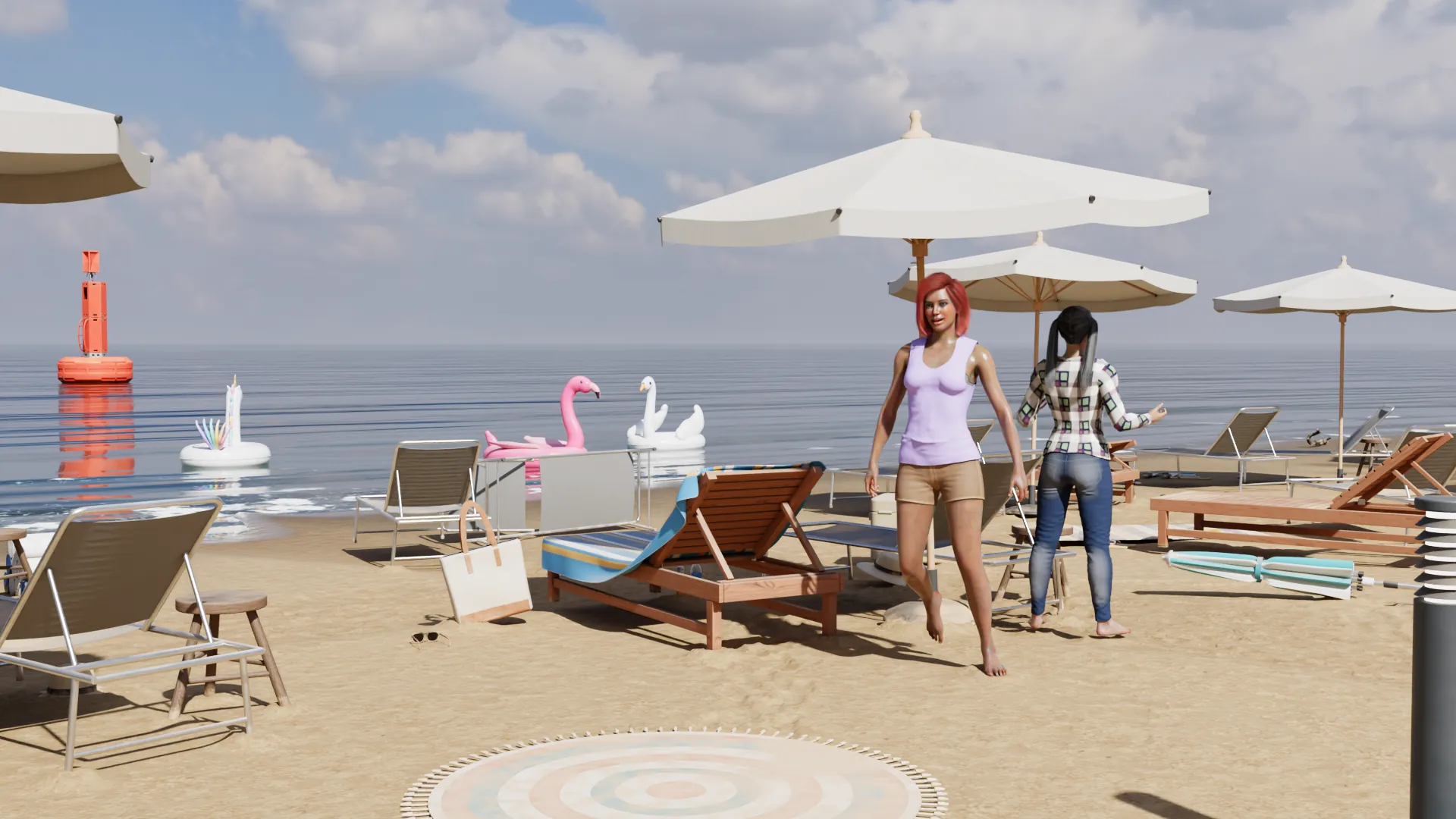
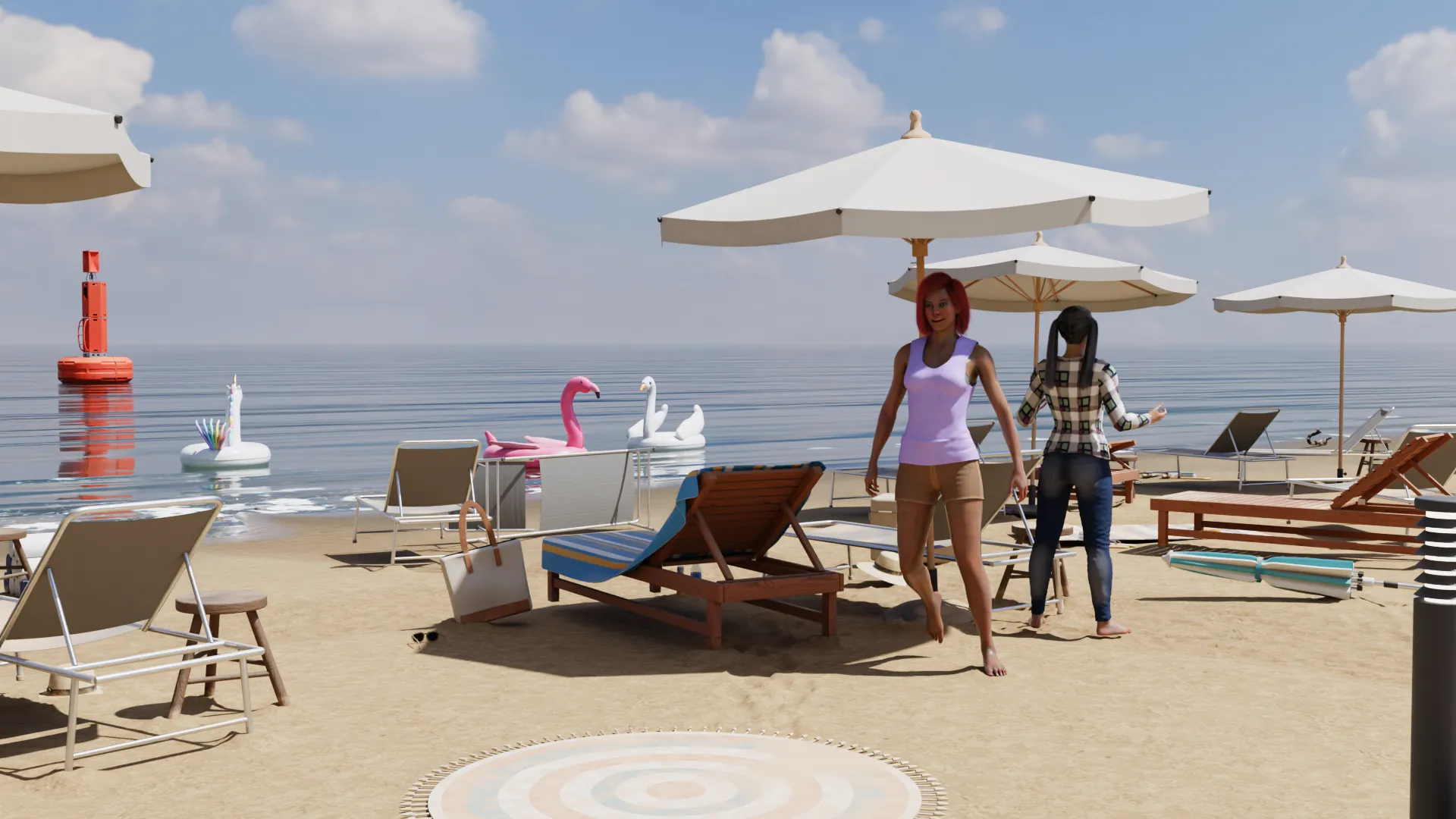
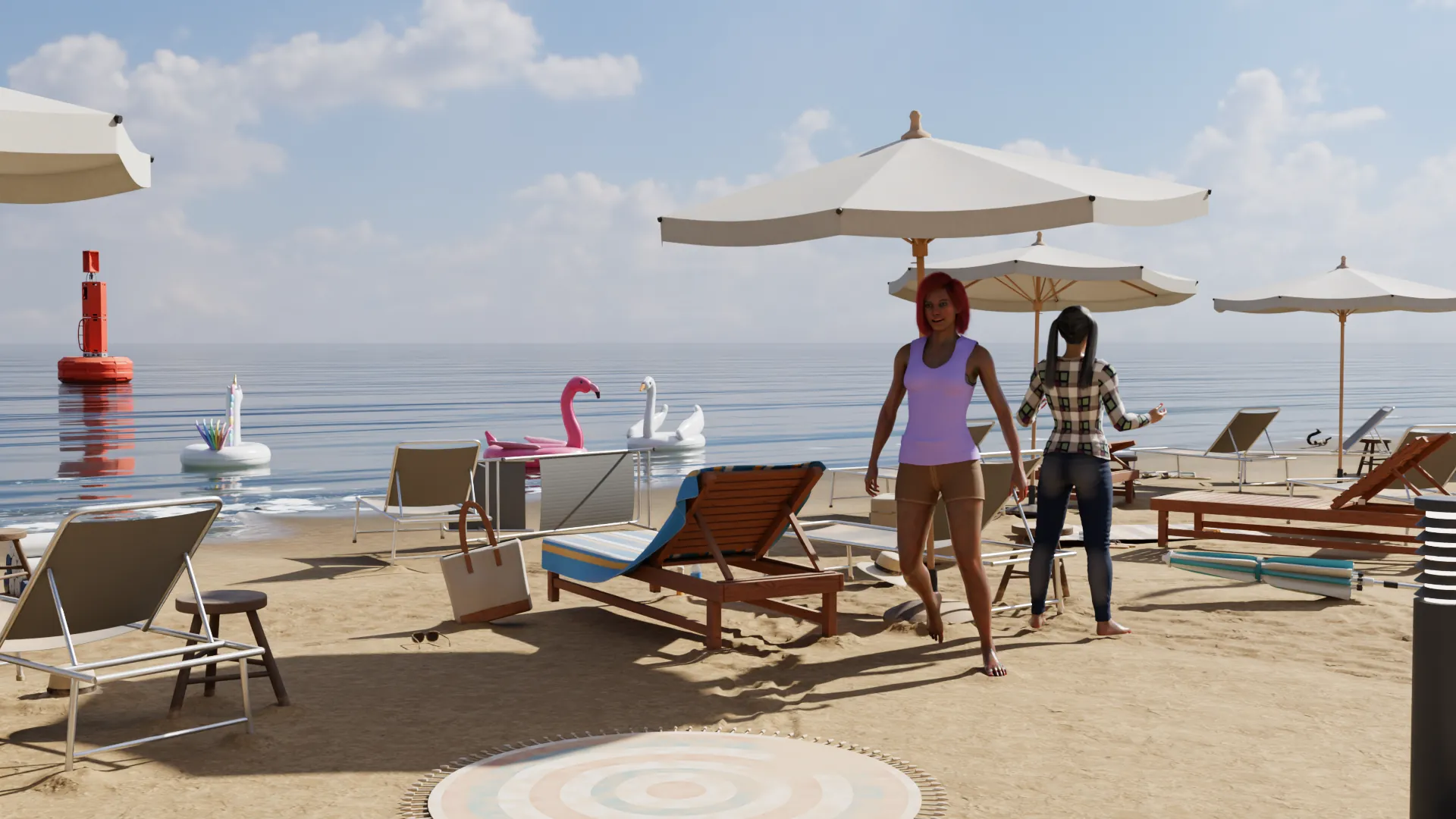
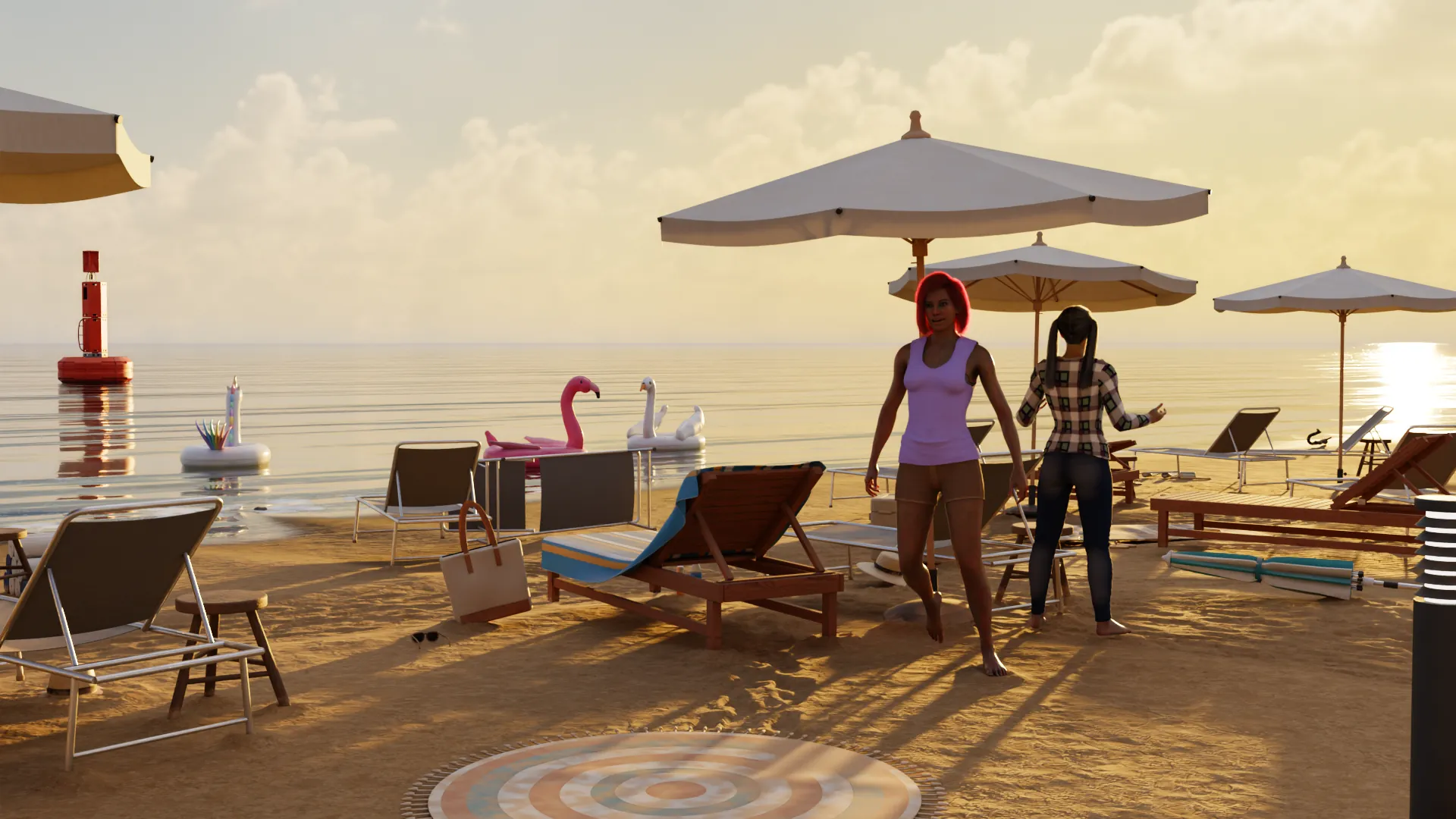
Indoors, lamps bring their own light, and the sky outside still comes through the windows. There are over 50 skies and backdrops, from a photo studio to starry nights.
Move the camera, keep the scene
This is where 3D pays off. Once a scene is built, a new angle costs almost nothing. These three pictures are the same two characters in the same scene.

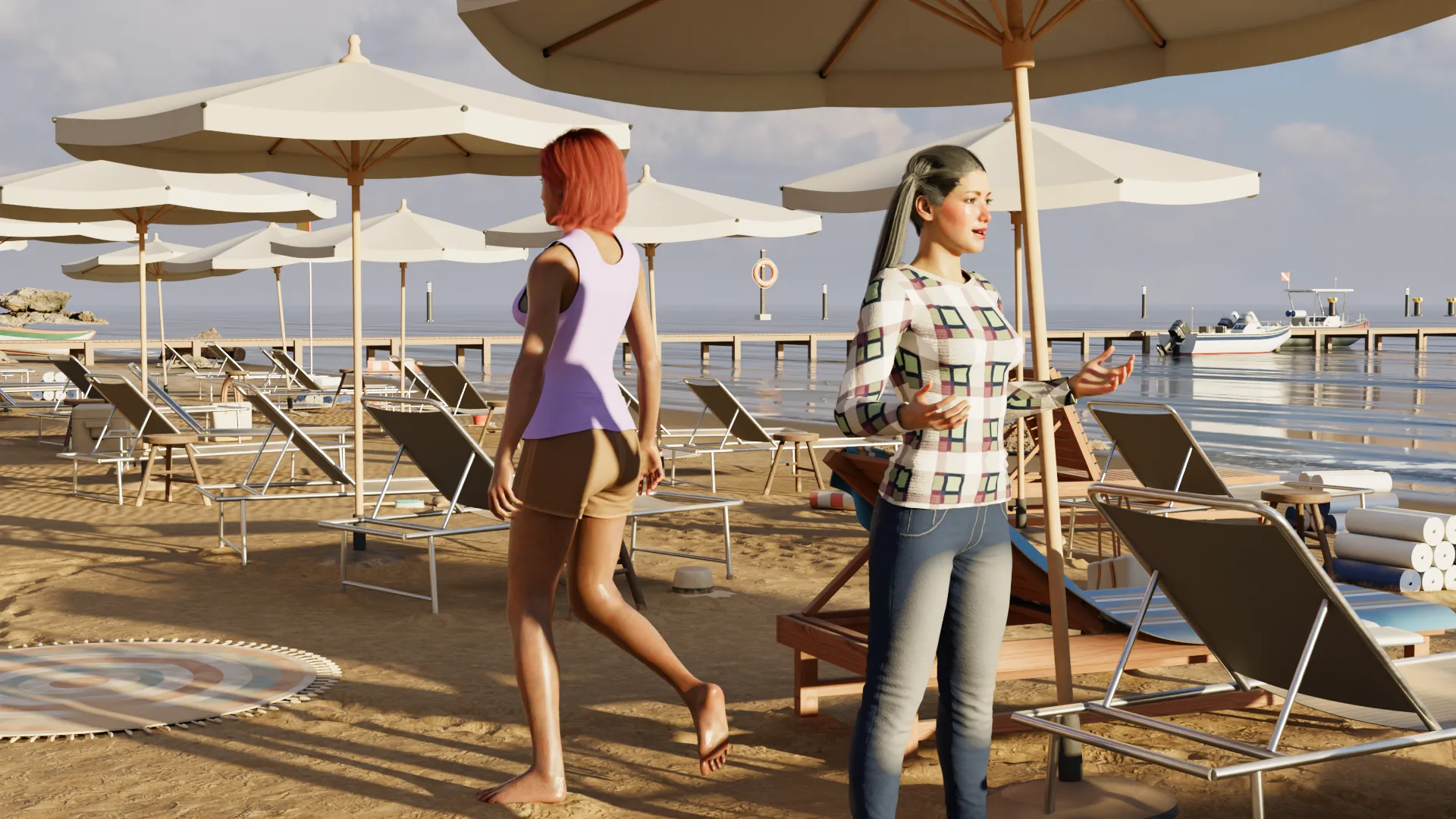
Use a longer lens (85 mm or so) for faces and a wider one (24 to 35 mm) to show the room. Then turn on background blur, which you can see in the view as you set it. A look such as Film or Noir goes on last, with a little grain if you want it.
Render at the size your game uses
Pictures are always 16:9, in three sizes: 1080p, 4K and 8K. Many visual novels run at 1920 × 1080, so 1080p is a sensible start. A 1080p picture of a park scene took about 14 seconds on an M5 Max. Older chips take longer. 8K has four times the pixels of 4K and takes about four times as long.
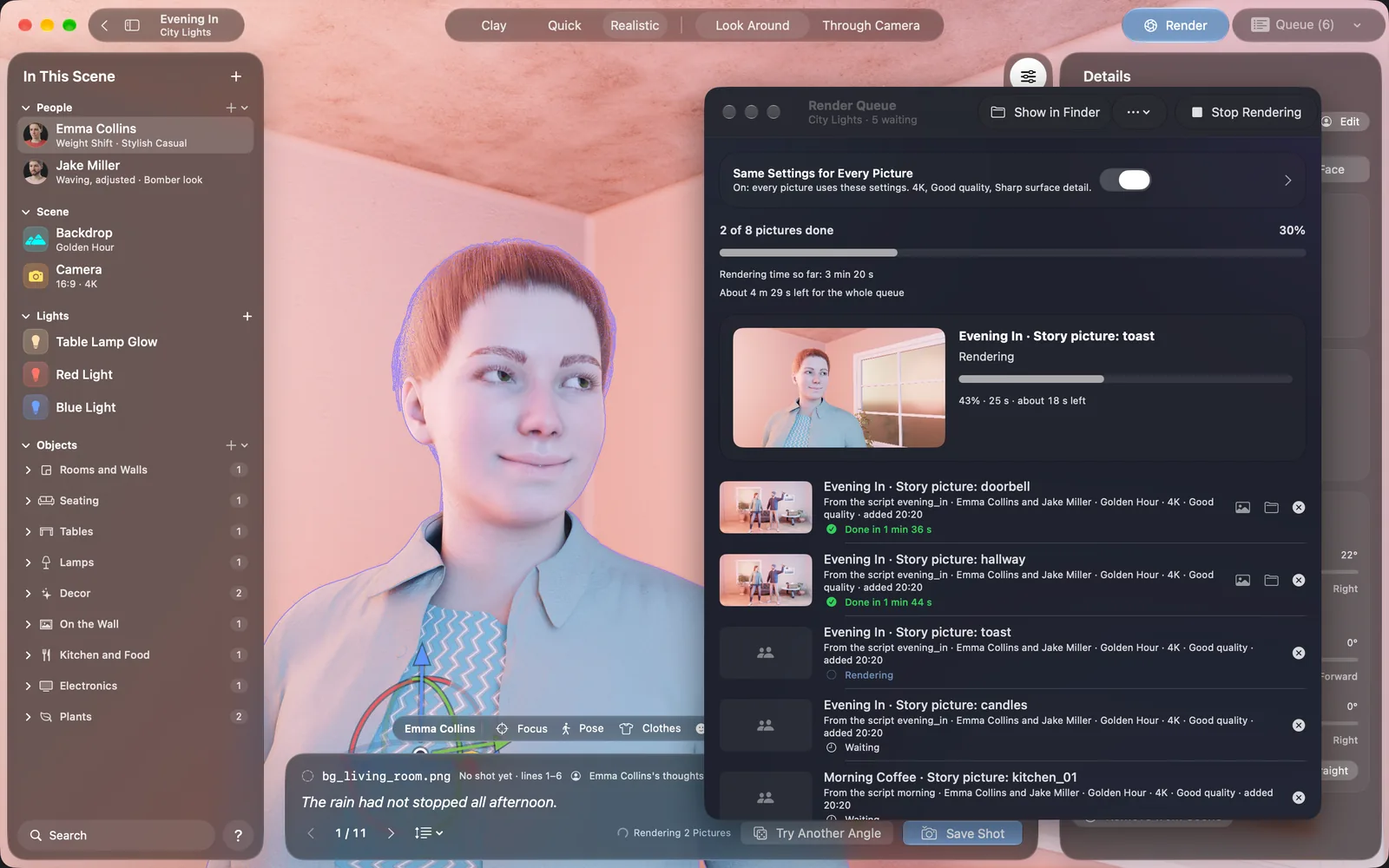
For a set of CGs, add them to the render queue and let it work through them with the same settings.
Questions
What does CG stand for in a visual novel?
Computer graphics, but in visual novels it has come to mean a special full-screen illustration of an important moment, sometimes called an event CG. Readers often unlock them in a gallery.
How many CGs does a visual novel need?
There is no standard number. It depends on the length of the game and your budget. Count the moments a reader should remember, then add a few, and cut from there.
Can I show variations of the same CG?
Yes. Keep the scene, change an expression, the hour or the weather, and render again. Each variation is a new picture with the light worked out again.
Can NovelStage make drawn or anime CGs?
No. It renders realistic people that look photographed. If your story needs drawn art, a commission is the better route.